Statement by Dawn Littlefield, Founder of the ARK Initiative Prepared 2026-10-13 for the SDG&E Golden Pacific Powerlink public meeting, Wednesday, October 14, 2026, 4:00–7:00 PM, Borrego Springs Resort.
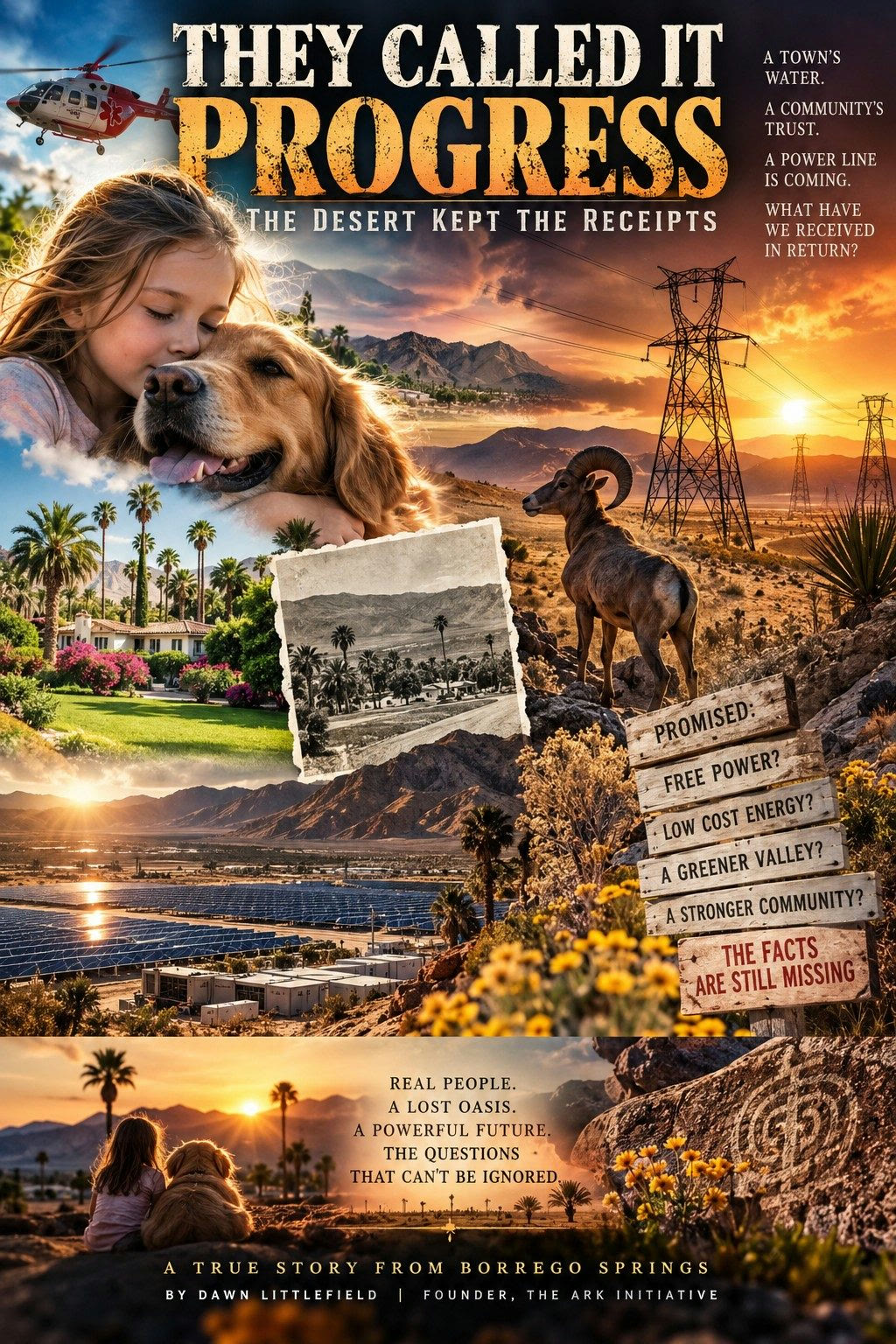 The desert we call home—and the future we are asking people to protect.
Good afternoon. My name is Dawn Littlefield. I live here in Borrego Springs, and I'm the founder of the ARK Initiative, a nonprofit dedicated to regenerative communities, environmental restoration, and helping people become more self-sufficient.
I want to begin by reminding everyone what makes this place extraordinary.
Borrego Springs is not just another desert town.
We live beside Anza-Borrego Desert State Park, the largest state park in California, within a desert region internationally recognized for its ecological importance.
This is habitat for endangered Peninsular bighorn sheep. It's a landscape of ancient geological formations, rare desert ecosystems, wildlife corridors, archaeological and cultural heritage, and extraordinary night skies.
People come here because there are still places where the mountains, stars, and living desert haven't been swallowed by industrial development.
And now we're discussing running another massive electrical transmission corridor through this landscape.
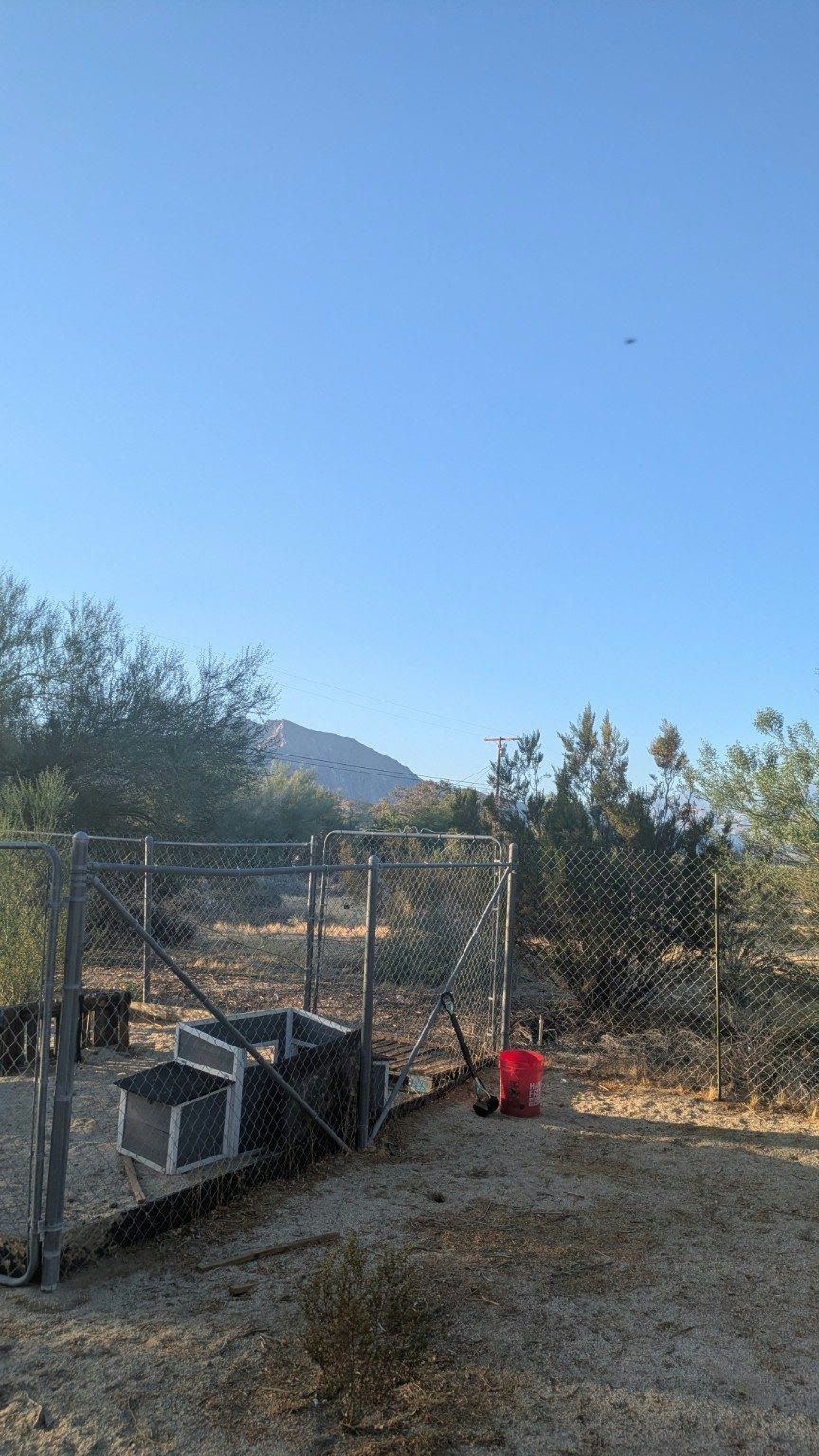 The view from our neighborhood in Borrego Springs.
What happens to the habitat disturbed by construction? The access roads? The wildlife movement corridors? The viewsheds? The cultural sites? The cumulative effects of adding more industrial infrastructure?
And why are we considering a route through protected desert when a similar route raised such serious environmental objections during the Sunrise Powerlink proceedings?
I don't believe we should sacrifice something irreplaceable without demonstrating that there is no reasonably feasible, less damaging alternative.
Now, I want to talk about something else.
The people who actually live here.
We survive summer temperatures that can reach 110, 115, and sometimes even higher.
For some people, air conditioning isn't a luxury. It's what keeps them alive.
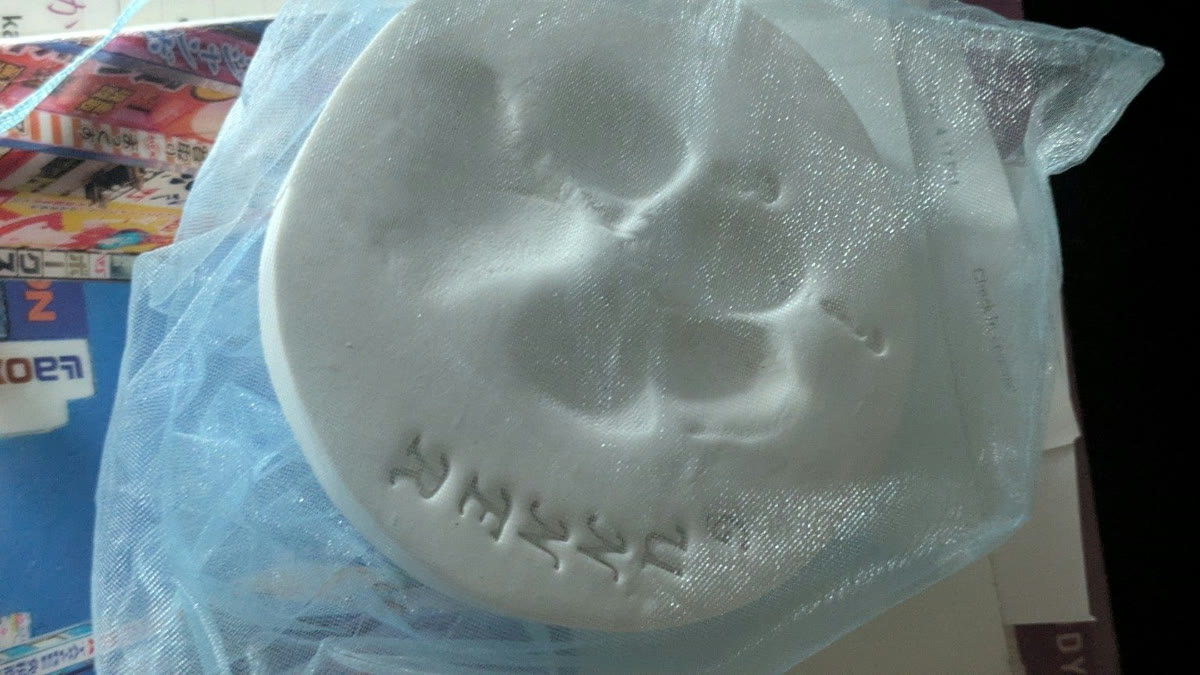 Gunner's pawprint. We keep it close.
And yet, we're being asked to accept enormous utility bills as though that is simply the price of living here.
I have solar panels on my home. Twenty-two of them. And I'm looking at an electricity bill of approximately $700 a month.
Seven hundred dollars!
I want SDG&E and the solar provider to explain exactly how that happens.
How much electricity is my system actually generating? How much is being credited? How much am I purchasing back from the grid, and at what rates? Is the equipment functioning correctly? And were the savings promised to me realistic?
Because if a household with substantial solar generation is still facing bills like that, something deserves a very close examination.
And I'm not the only person who deserves clear answers.
Before you ask this community to accept another massive investment in transmission infrastructure, explain why the energy system we already pay for isn't delivering affordable, dependable service to everyone who lives here.
Now, I didn't come here just to complain.
I came here because we're working on another approach.
The ARK Initiative is developing a model for regenerative, resilient communities. At our first demonstration site here in Borrego Springs, we're working with solar energy, battery storage, passive and evaporative cooling, water conservation, and ways of supporting plants, animals, and people in extreme desert conditions.
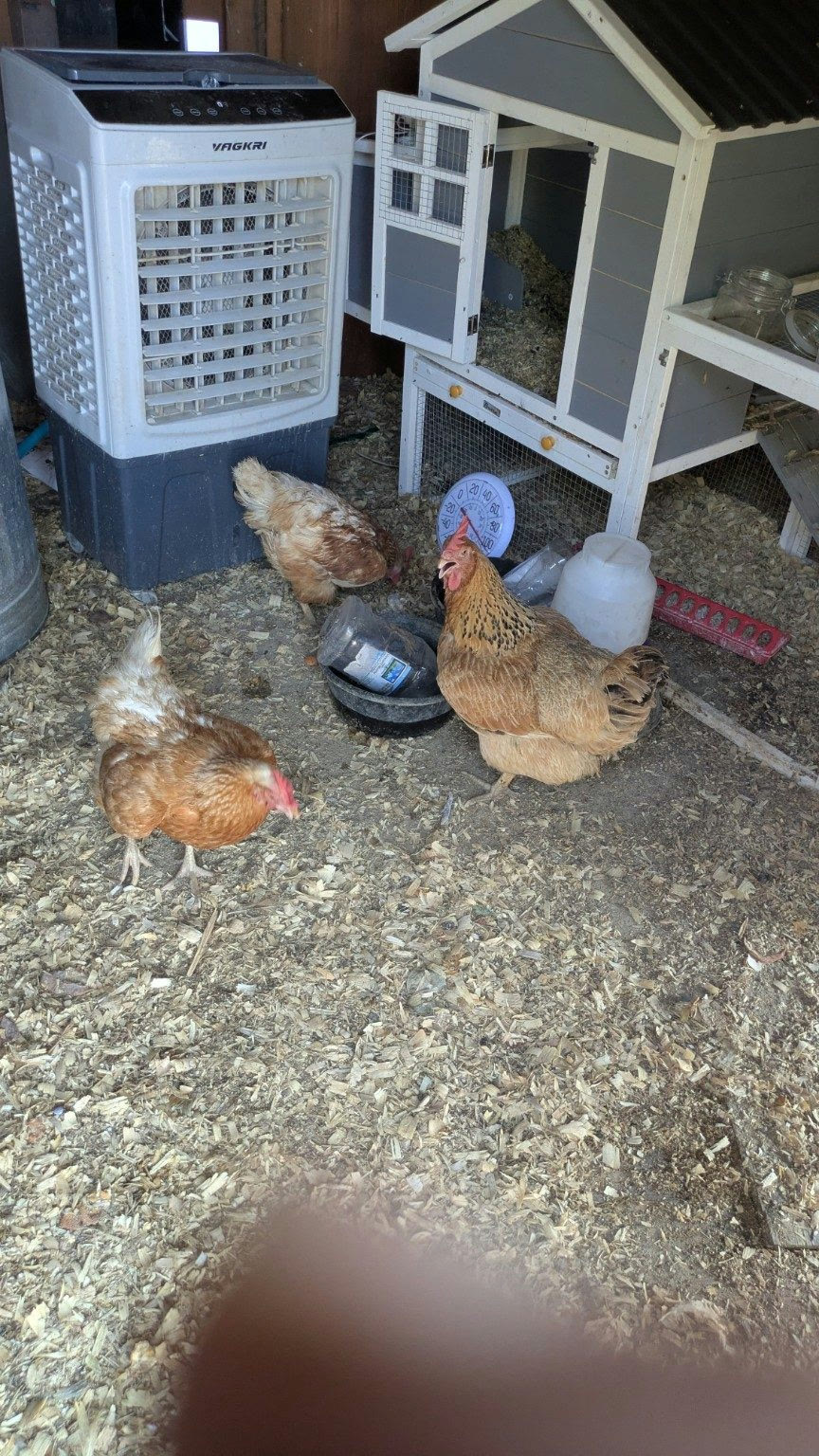 Inside the chicken shelter, we keep a thermometer close and the evaporative cooler running when the desert heats up.
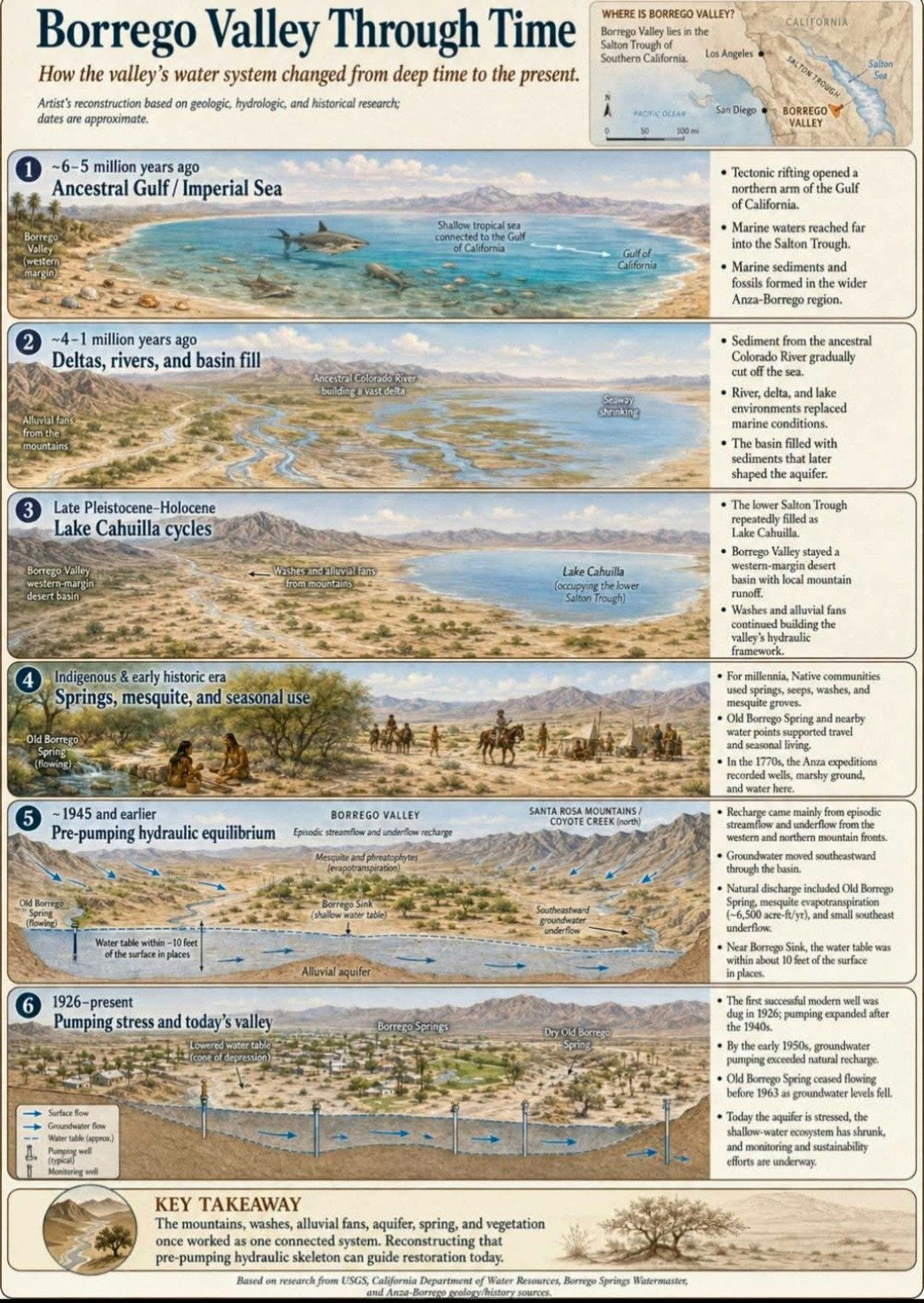 An illustrated look at the valley's changing water story. The groundwater figures come from the studies cited below. Source: U.S. Geological Survey, Borrego Valley groundwater conditions.
Our larger vision is to help Borrego Springs become a community where residents have far greater control over their essential resources.
We want local solar generation, shared and household battery storage, neighborhood microgrids, efficient homes, and systems that can keep essential services running when the larger grid fails.
We want to explore community ownership, nonprofit partnerships, and funding models that reduce energy costs rather than leaving families dependent on ever-increasing bills.
And our ultimate goal is ambitious:
We want every full-time resident of Borrego Springs to be able to live without worrying about whether they can afford the electricity needed to survive the summer.
That is a goal we're working toward, not a promise that we've already funded or achieved.
But why shouldn't that be our goal?
We live in one of the sunniest places in the country. We have the technology to capture and store energy. We have the ability to design buildings that require less cooling.
Surely we can at least investigate whether the people who endure this climate can share more directly in the benefits of its abundant sunshine.
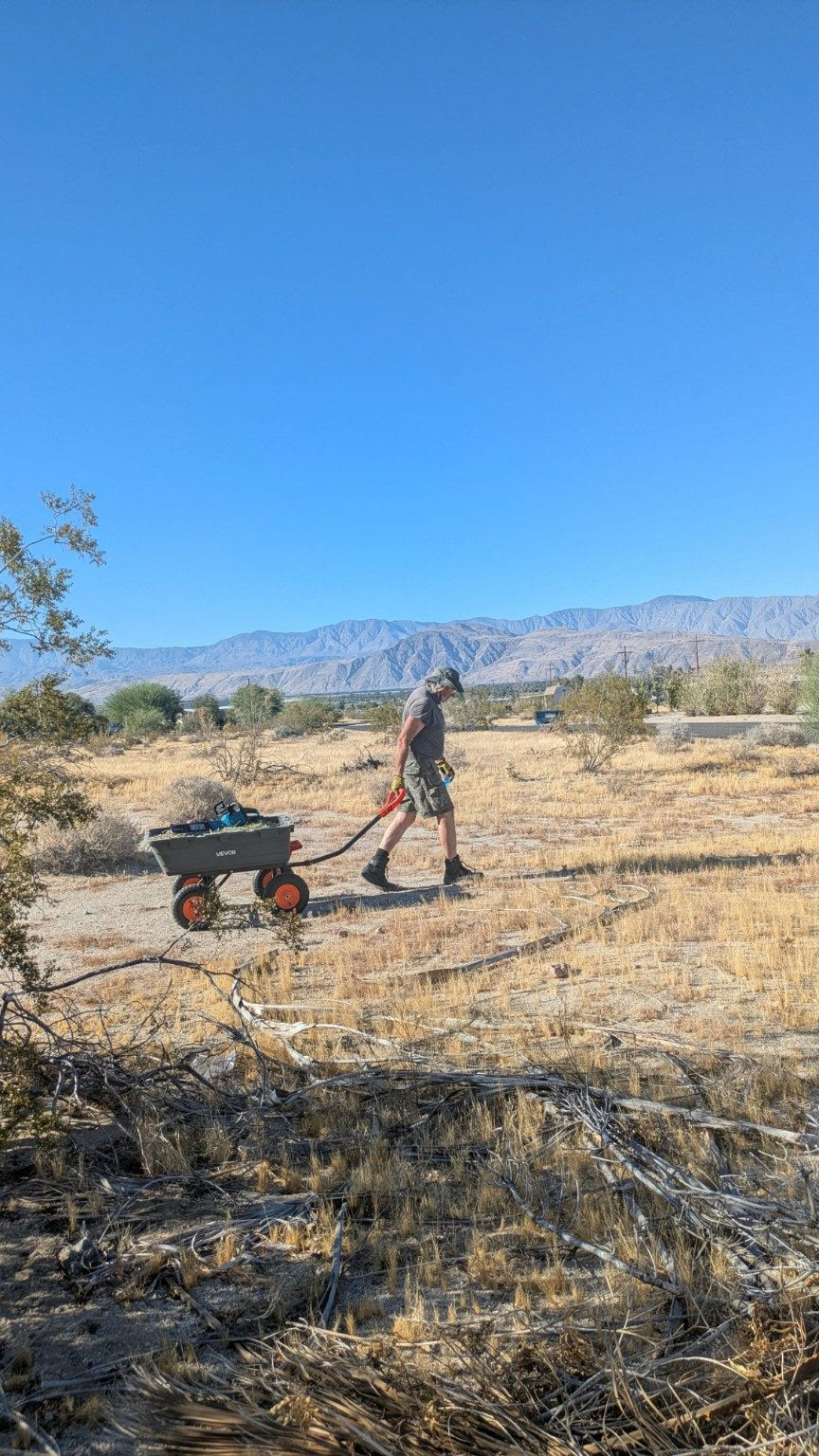 Working the land at ARK Unit 1.
I am not opposed to reliable electrical infrastructure. I'm opposed to treating bigger transmission projects as the automatic answer while the people living beneath the wires struggle to pay their bills.
So I have a few requests.
First, show us the full environmental consequences of every proposed route, including alternatives that avoid the park.
Second, show us a transparent comparison of centralized transmission investment with distributed generation, storage, efficiency, and microgrid options.
Third, tell us what this project will cost ratepayers, what financial returns are anticipated, and how Borrego Springs residents will benefit.
And fourth, explain what SDG&E is prepared to do right now to improve affordability, reliability, and energy resilience in this community.
We should not have to choose between protecting our desert and keeping our neighbors alive during the summer.
This desert is our home. Its wildlife matters. Its people matter.
And survival should not be a luxury reserved for those who can afford the electric bill.
Thank you.
— Dawn Littlefield
 The ARK Initiative — the garden is the proof.
Sources and questions for follow-up
- California Public Utilities Commission — Golden Pacific Powerlink project overview (updated August 2026)
- Golden Pacific Powerlink — preliminary routes, alternatives, and open-house series (Borrego Sun) · East County Magazine
- California Energy Commission — Borrego Springs microgrid final report (2019), CEC-500-2019-011
- SDG&E — microgrid operation, May 2015 (June 1, 2015 announcement)
- U.S. Geological Survey — Borrego Valley groundwater conditions
Sources as corrected and checked October 14, 2026, for the companion illustrated article, "They Called It Progress. The Desert Kept the Receipts."