Follow the gold line. Where it turns into a dashed, dark case, the record breaks. Read what survived, then read what did not.
ABOUT 300,000 TO 12,000 YEARS AGO
Before Names
For almost the entire human story there are no written names, no dated reigns, and no explanations in the makers’ own words. There are tools, hearths, pigments, burials, footprints, bones, and changed landscapes. People learned weather, animals, plants, water, and one another because survival required close attention.
What vanished is nearly everything they said, sang, believed, feared, and understood. The Museum begins in that silence on purpose.
EVIDENCE: OBJECTS AND SITESOPEN GAP: ALMOST ALL VOICES
AT LEAST 45,000 YEARS AGO, AND STILL BEING READ
The Animal Teachers
Some of the oldest surviving human images are animals. The first lesson was observation: track the animal, learn its season, its senses, its route, its danger, and its gift. Dawn’s research asks visitors to keep following that thread after the cave wall, into temples, cities, machines, and the Ark itself.
An animal image may begin as a record of a living neighbor. Over generations it can also become compressed instruction: what this being notices, how it moves, what it protects, what it changes, and what a builder should learn from it. The full Animal Blueprint gallery stands below.
EVIDENCE: ANCIENT ANIMAL IMAGESDAWN’S METHOD: READ FUNCTION, NOT ONLY SYMBOL
ABOUT 18,000 TO 11,000 YEARS AGO
When the Ice Let Go, the Water Rose
As the last Ice Age loosened, seas rose by roughly 120 metres from the glacial low point. Coastlines moved. River mouths, hunting grounds, settlements, graves, and whole inhabited landscapes went under water. The drowned continental shelves are one of the largest missing archives on Earth.
Flood stories appear in many cultures. Mesopotamian traditions preserve Atrahasis, Ziusudra, and Utnapishtim. Local floods are historical. A single worldwide flood is not established. Dawn’s line is drawn through both facts: before the water, after the water, and a world forced to reorganize.
EVIDENCE: SEA LEVEL AND FLOOD TRADITIONSDAWN’S LENS: PRE-FLOOD AND POST-FLOODOPEN GAP: THE DROWNED COASTS
ABOUT 9500 TO 8000 BCE
Stone Circles Before Cities
At Göbekli Tepe in present day Türkiye, people raised monumental stone enclosures with carved animals and humanlike T-shaped pillars before farming villages, pottery, writing, or cities were established there. Hunter gatherers organized labor, feasting, memory, and meeting at a scale older textbooks did not expect from them.
The builders left no written explanation. Parts of the site were later covered, and the reasons remain debated. Their names, language, and full teaching are gone. The stones are a sentence with most of its words missing.
EVIDENCE: MONUMENTAL ENCLOSURESOPEN GAP: BUILDERS AND MEANING
ABOUT 7100 TO 5700 BCE, AND DAWN’S WIDER NEOLITHIC ARC
Before Babel Broke Us
At Çatalhöyük, thousands lived closely together without a clear palace, fortress, or royal quarter surviving in the record. In Before Babel Broke Us, Dawn reads the wider Neolithic world of goddess figures, shared water, and earth attuned communities as a partnership operating system that lasted longer than many empires.
Scholars debate how peaceful, equal, or goddess centered these societies were. Dawn’s hinge is clear: a convergence of climate shock, migration, and conquest fractured an older web, and the fall into hierarchy was historical as well as mythic.
EVIDENCE: SETTLEMENTS AND FIGURESDAWN’S LENS: PARTNERSHIP BEFORE DOMINATIONSERIOUS QUESTION: HOW FAR THE PATTERN HOLDS
ABOUT 3400 BCE ONWARD
Before Babylon Became the Story
Writing appears in Mesopotamia and Egypt, and the record changes shape. Older Sumerian creation traditions remember female powers such as Nammu and Ninhursag. Babylonian Tiamat is later split and slain in the Enúma Eliš creation epic. Dawn’s Before the Maps Changed keeps the careful line: these figures are related by theme, not proof of one single original goddess.
Babel belongs here as a teaching story about unity, scattering, and language. Historical linguistics tells a different and compatible kind of truth: languages branch gradually through comparison, contact, migration, and time. The Museum keeps myth and method on separate shelves of the same room.
EVIDENCE: EARLY WRITING AND TEXTSSTORY: BABEL AS ETIOLOGYMETHOD: LANGUAGE FAMILIES
7TH CENTURY BCE
The First Great Archive We Can Still Touch
King Ashurbanipal assembled tablets from across Mesopotamia at Nineveh, including omen series, medicine, epics, and older traditions. Thousands of fragments survive, and scholars still join them piece by piece. The archive proves an ancient hunger to gather the whole memory of a world into one place.
It also proves the danger of a single center. When Nineveh fell, the library was buried in ruin. Clay survived fire better than papyrus or wood, which is one reason Mesopotamia speaks so loudly while other worlds remain quiet.
EVIDENCE: SURVIVING TABLETSPATTERN: MEMORY FOLLOWS DURABLE MATERIAL
9TH TO 1ST CENTURIES BCE, WITH A LONG AFTERLIFE
Many Gods, and the Narrowing Door
Inscriptions from Kuntillet Ajrud and Khirbet el-Qom preserve language of YHWH together with asherah. Scholars still debate whether the word names the goddess, a sacred wooden object, or a related form. The biblical text itself records later orders to cut, remove, and burn asherah objects, including the reform story of Josiah in 2 Kings 23.
Dawn calls this the destruction of the Mother. The careful exhibit label is narrower and stronger: a Mother, a tree, a pole, and a grove were argued over, edited, condemned, and partly erased inside the very texts that preserve their memory. Monotheism did not arrive everywhere at once, and many gods did not simply vanish. The door narrowed unevenly, by teaching, law, empire, and force.
EVIDENCE: INSCRIPTIONS AND TEXTSDAWN’S LENS: THE MOTHER EDITED OUTDEBATE: GODDESS OR CULT OBJECT
ABOUT 300 BCE TO 600 CE
Alexandria, the Library That Died Slowly
The Great Library of Alexandria was not lost in one clean fire. Across centuries, war, changing patronage, expulsion, neglect, and shifting institutions thinned the collection and the community around it. No complete catalogue survives, so even the size of the loss cannot be honestly counted.
That is a special kind of gap. We know a center of memory failed. We do not know everything it held. A civilization can lose a library by burning, and it can also lose one by slowly deciding memory is no longer worth feeding.
EVIDENCE: GRADUAL DECLINEOPEN GAP: NO COMPLETE INVENTORY
7TH CENTURY BCE TO THE PRESENT MAP
Scythians, Steppe Worlds, and the Names That Moved
The Scythians were real horse peoples of the Eurasian steppe, known through burials, weapons, animal art, goldwork, and the records of neighboring empires. A 2,300 year old Scythian boot from the Altai, preserved with pyrite and intricate work in its sole, becomes in Dawn’s The Scythian Circuit a question about grounding, Earth resonance, and technologies of relationship that modern categories may miss.
Centuries later, European maps used Tartary or Tartaria as broad and shifting labels for northern and central Asia. The label moved. Peoples were renamed. Gog and Magog were reinterpreted. A map can preserve a place and erase its own history at the same time.
EVIDENCE: SCYTHIAN BURIALS AND MAP LABELSDAWN’S LENS: THE BOOT AS BLUEPRINTOPEN GAP: LABEL IS NOT AN EMPIRE
1562 AND THE COLONIAL CENTURIES
The Burned Books of the Maya
At Maní in 1562, Maya books were burned in a public auto-da-fé under Diego de Landa. Only four generally accepted pre-conquest Maya codices survive. Behind that number stand histories, calendars, genealogies, astronomy, ritual knowledge, and names that cannot be reconstructed from four books.
The colonial cut was wider than one fire: languages punished, ceremonies suppressed, objects removed, children separated from elders, and archives carried into distant institutions. Living Indigenous communities preserved and continue to revive what conquest tried to end. The gap is real, and it is not the whole story.
EVIDENCE: MANÍ AND FOUR SURVIVING CODICESOPEN GAP: LIBRARIES THAT CANNOT BE COUNTED
1800s TO TODAY
Industry, Empire, and the Mud on the Windows
The Industrial Revolution multiplied records, photographs, newspapers, railways, factories, and printed books. It also powered colonial extraction, fossil fuel cities, residential schools, and new systems for deciding whose knowledge counted. More paper did not mean less erasure. It often meant erasure with better filing.
Dawn points to another reset in the mud flood stories: older buildings with buried lower floors, whole street levels raised, and cities rebuilt over their own recent past. Documented causes include street raising, flooding, sediment, fire rebuilding, and ordinary basements. Dawn keeps the larger question open because the visible result is the same: a city can stand on top of itself and forget the floor below within a few generations.
EVIDENCE: INDUSTRIAL AND COLONIAL RECORDSEVIDENCE: STREET RAISING AND BURIED FLOORSDAWN’S LENS: MUD FLOOD AS ANOTHER RESETOPEN GAP: NO SINGLE GLOBAL EXPLANATION PROVEN
THE LAST 4,000 YEARS, READ AT SPEED
The Loud Corridor
Bronze and iron, alphabets and empires, Rome and Han China, the spread of monotheisms, Islam and the House of Wisdom, Mongol roads, printing, gunpowder empires, colonization, steam, electricity, flight, world wars, atomic weapons, computers, and phones. It feels like all of history because it left the most records and built the present.
On the Museum line it is a corridor near the exit, about 1.3 percent of the human walk. Dawn’s warning hangs here: a young species with inherited tools can mistake the newest corridor for the whole house.
EVIDENCE: THE DOCUMENTED SURGEDAWN’S WARNING: NEWEST IS NOT WISEST
TODAY
The Digital Gap Is Already Open
Links rot. Platforms ban accounts. Formats become unreadable. Companies close. A phone breaks and takes the only copy. Dawn’s own accounts, essays, films, and social archives have already passed through bans, recoveries, exports, and reconstructions. The newest memory system is powerful and strangely fragile.
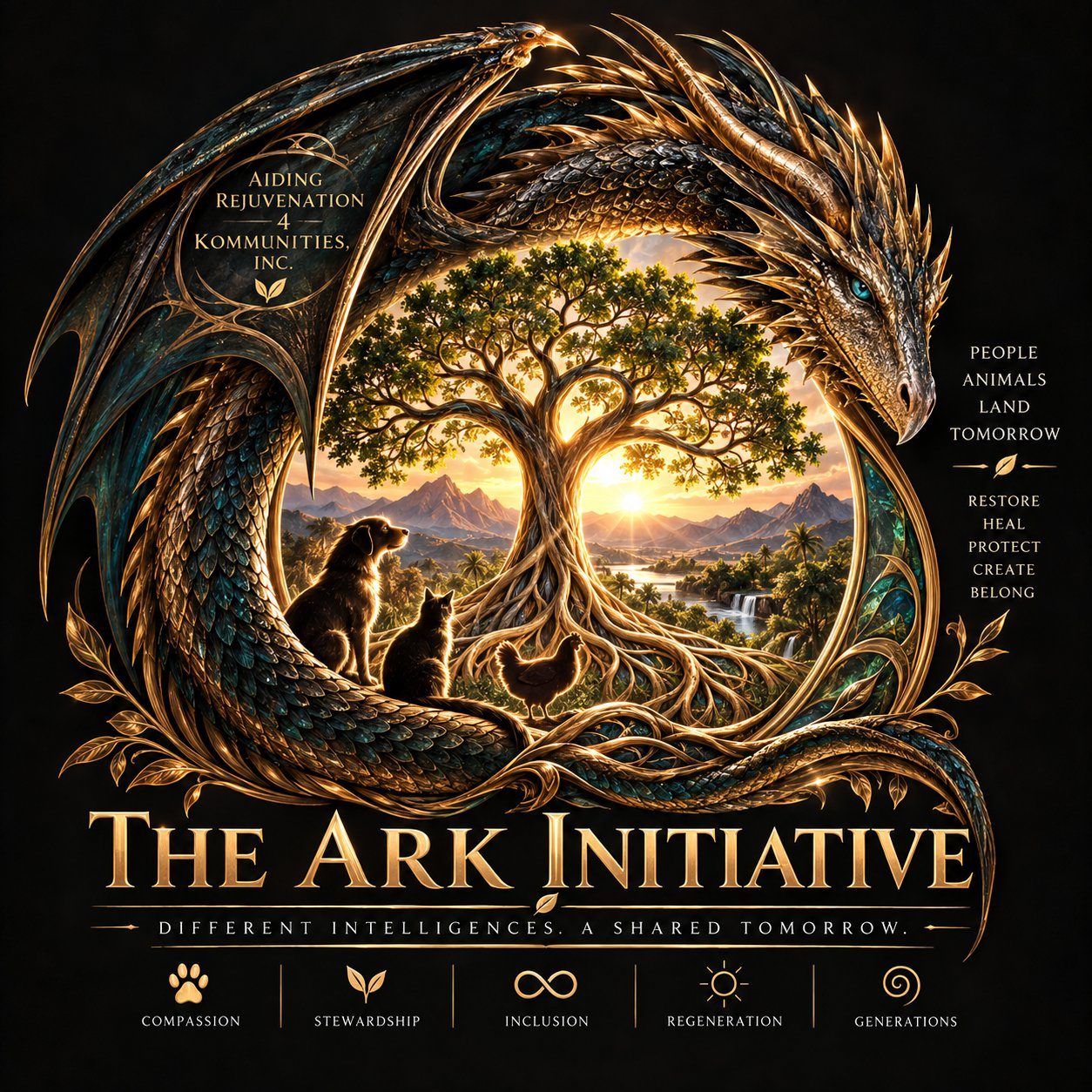
The Ark answer begins here: copies in more than one place, names preserved as written, primary sources kept beside interpretations, oral memory honored, and dark places marked honestly instead of paved over.
EVIDENCE: LINK ROT AND PLATFORM LOSSARK ANSWER: REDUNDANCY WITH PROVENANCE