
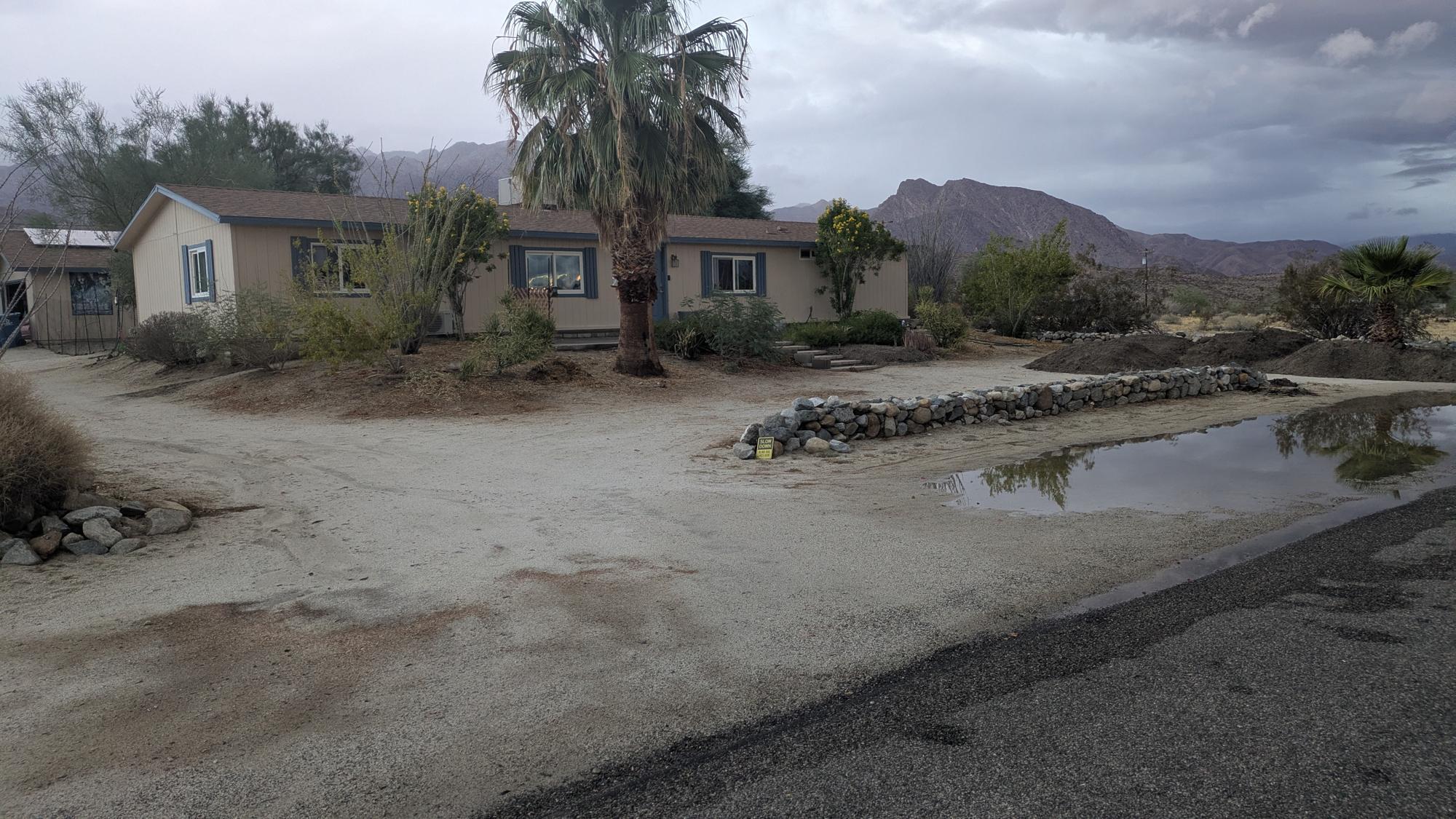
One Monsoon Morning
Twelve photos, 6:51 to 7:18 AM PT. Where the water went, what held, and what we lost.
Method note. These are qualitative observations from phone photos taken the morning after monsoon rain at Ark Unit 1, Borrego Springs (times from the photos’ EXIF data). No rainfall totals, infiltration rates or soil moisture readings were taken. Nothing here is a trial result; it tells us where to measure next.
1. The berm
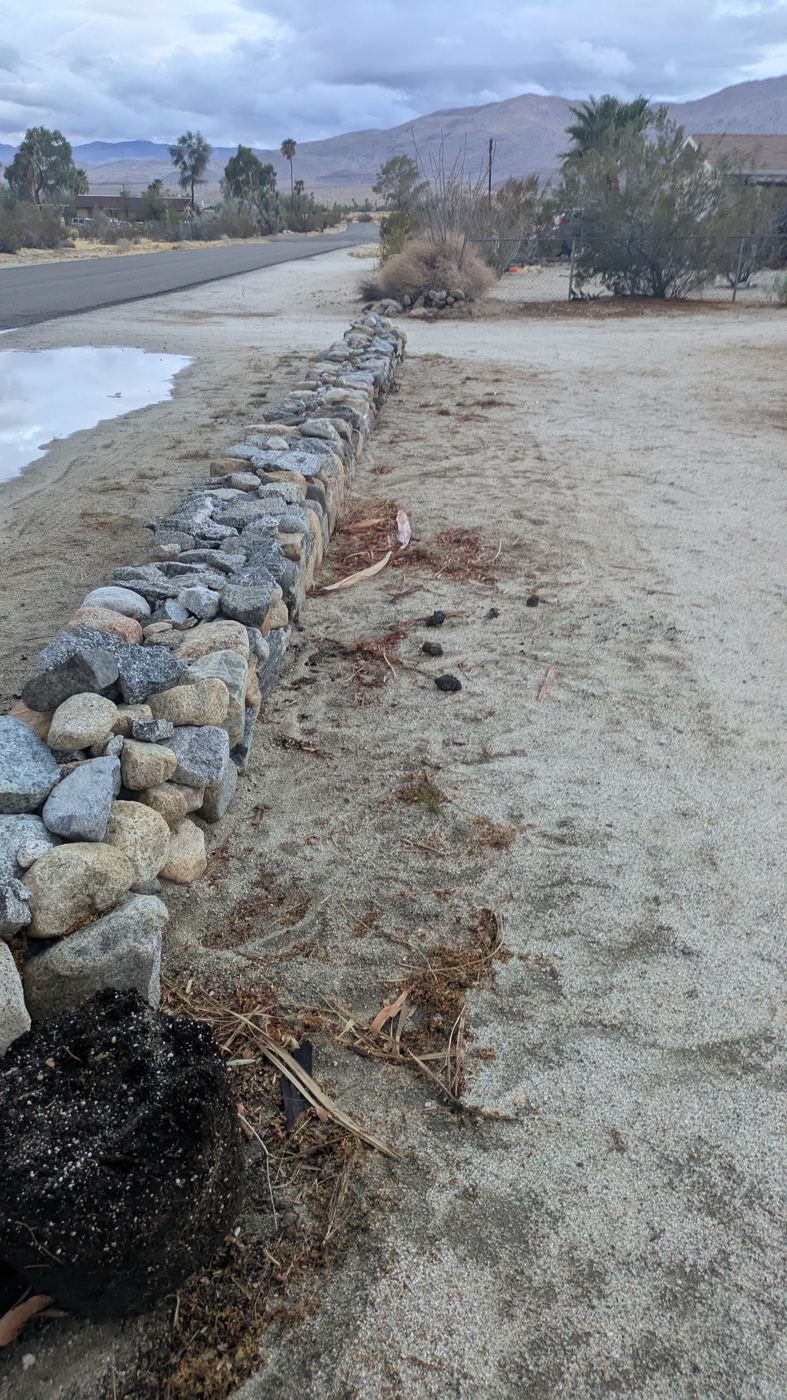
The road side of the property collected the runoff. A dry-stacked rock berm runs between the road and the yard. On the morning after the rain, standing water sat along the outside of the berm, reflecting the palms like a small lake, while the yard behind it was damp but had no standing water. One morning is not a study, but the berm did what a berm is for.
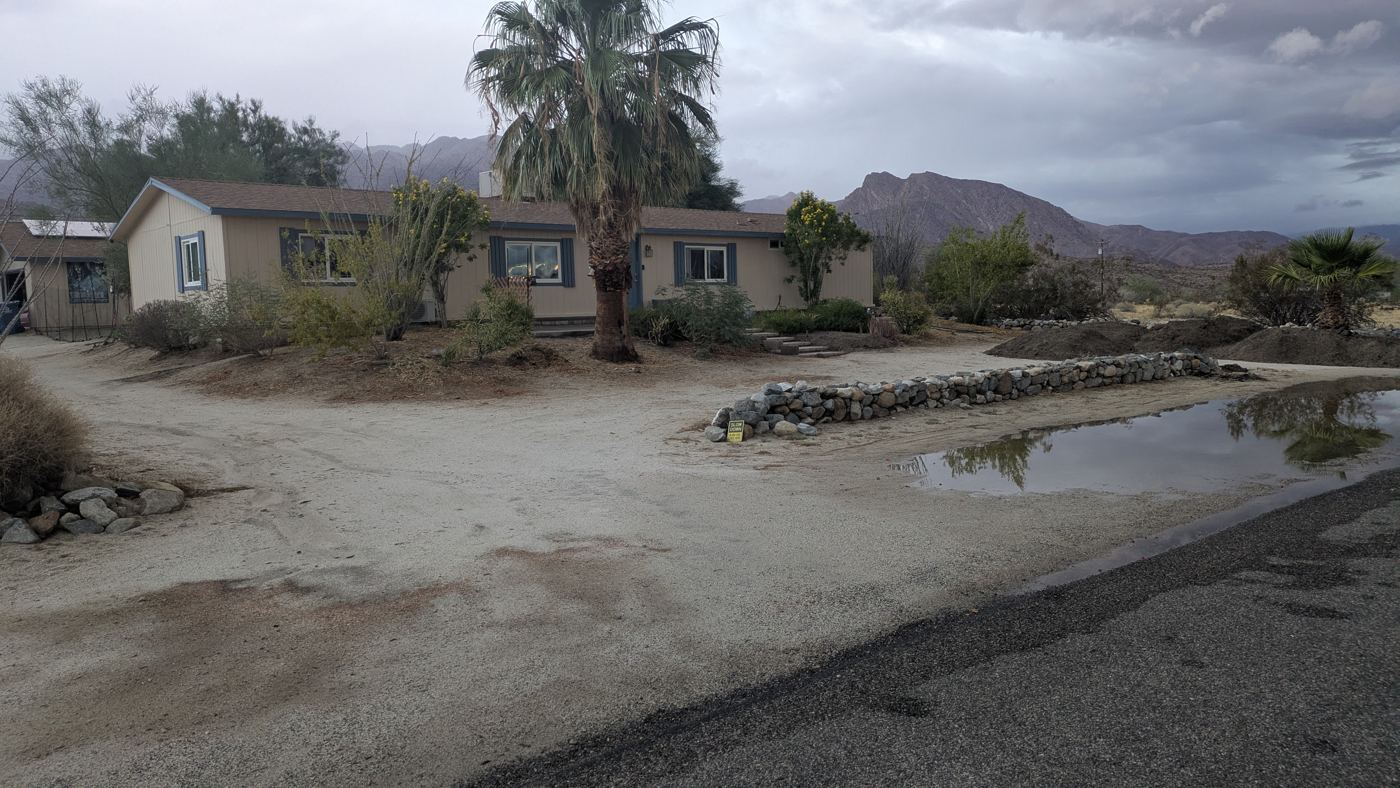
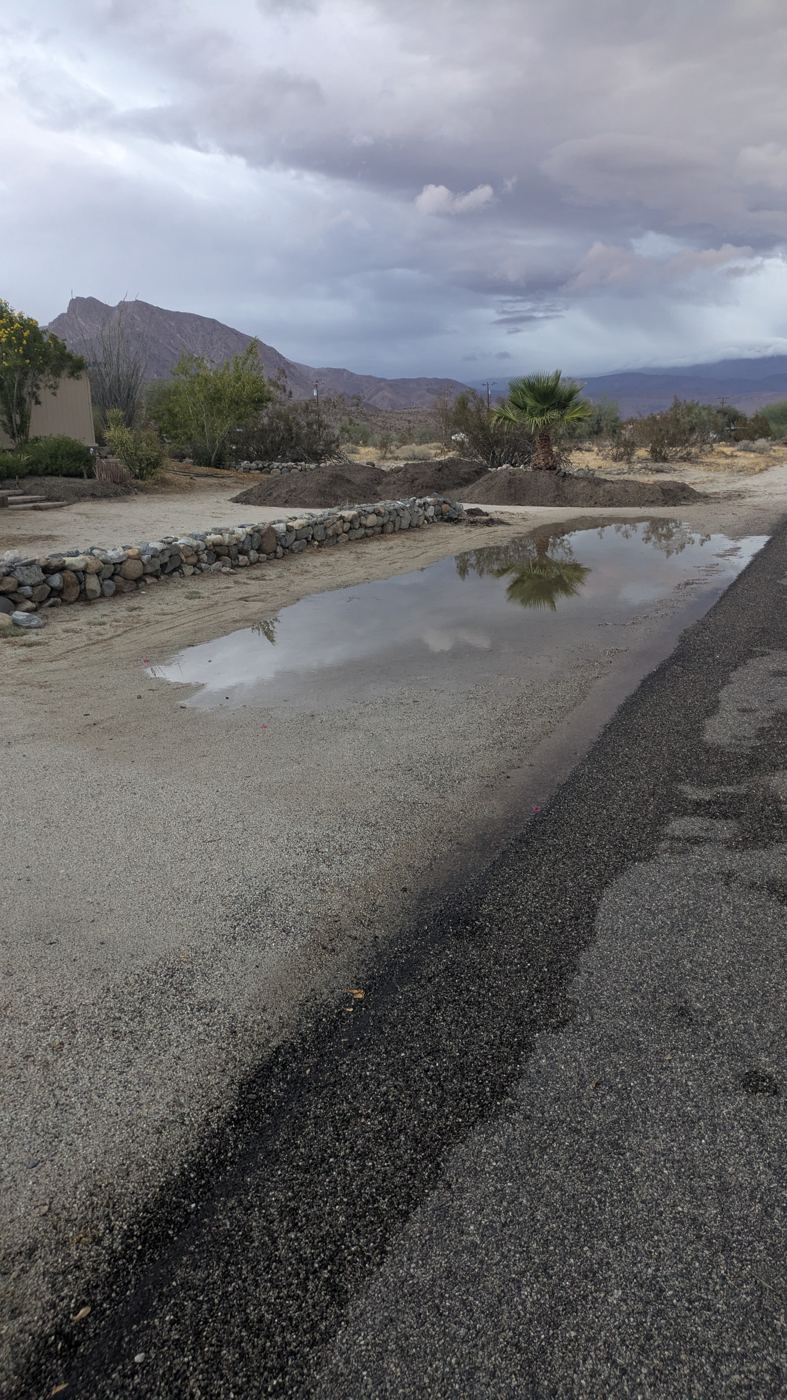
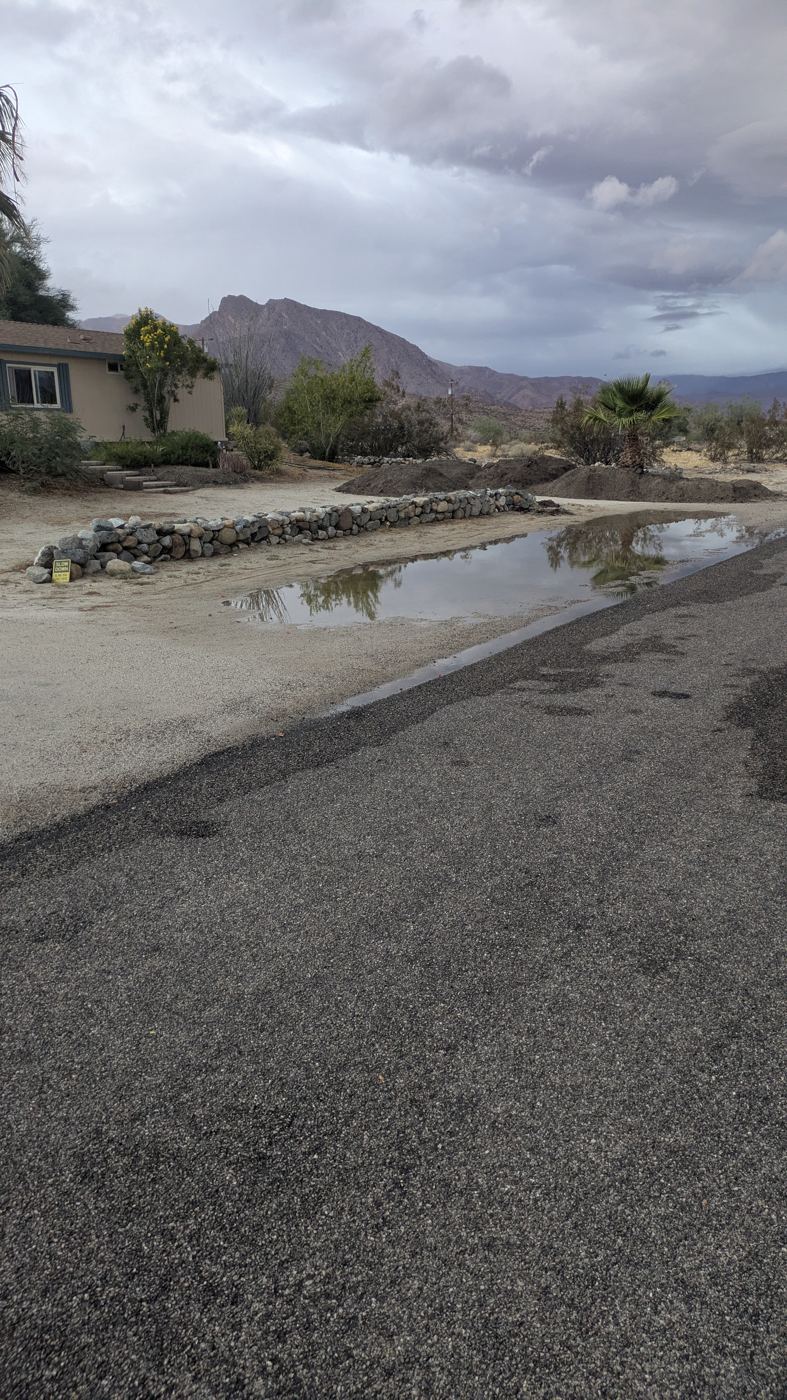
2. Where the water moved
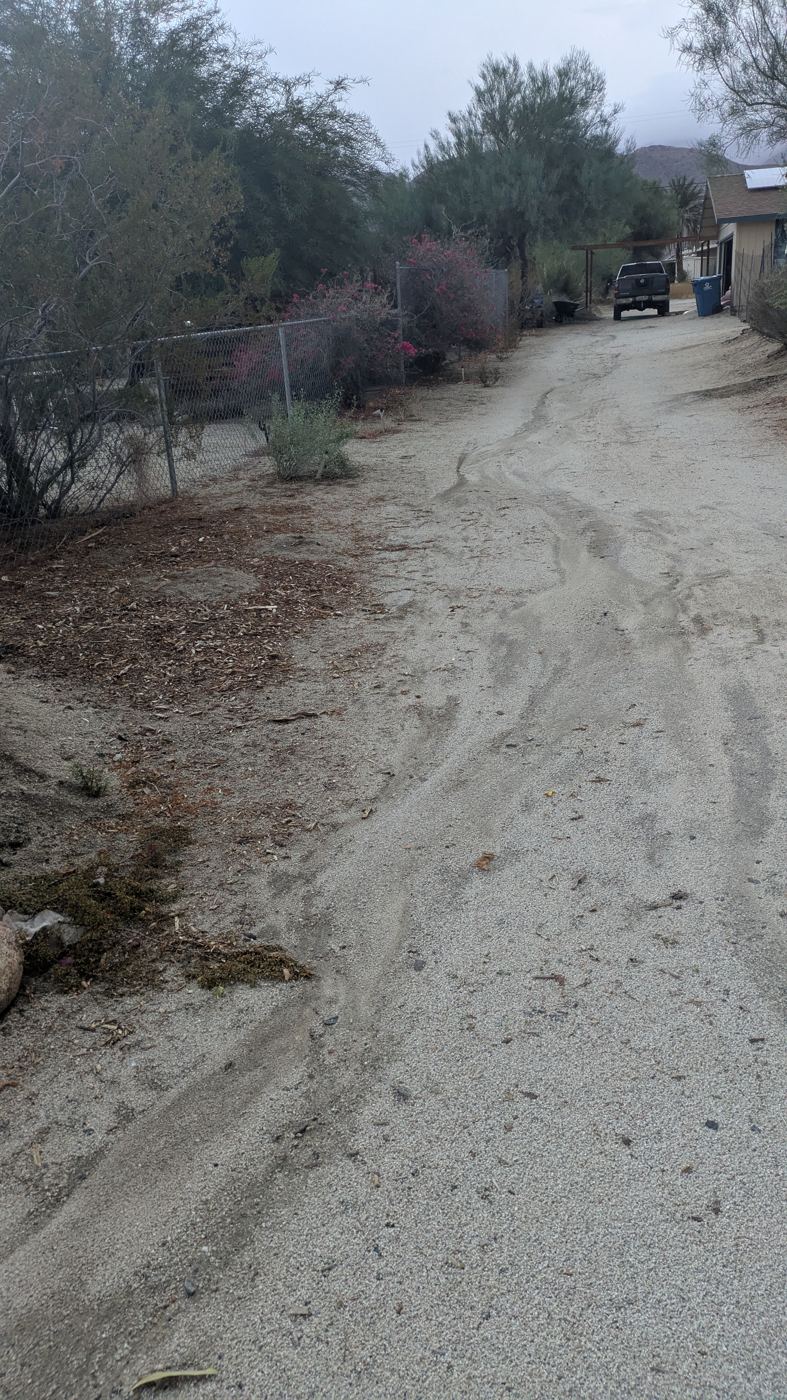
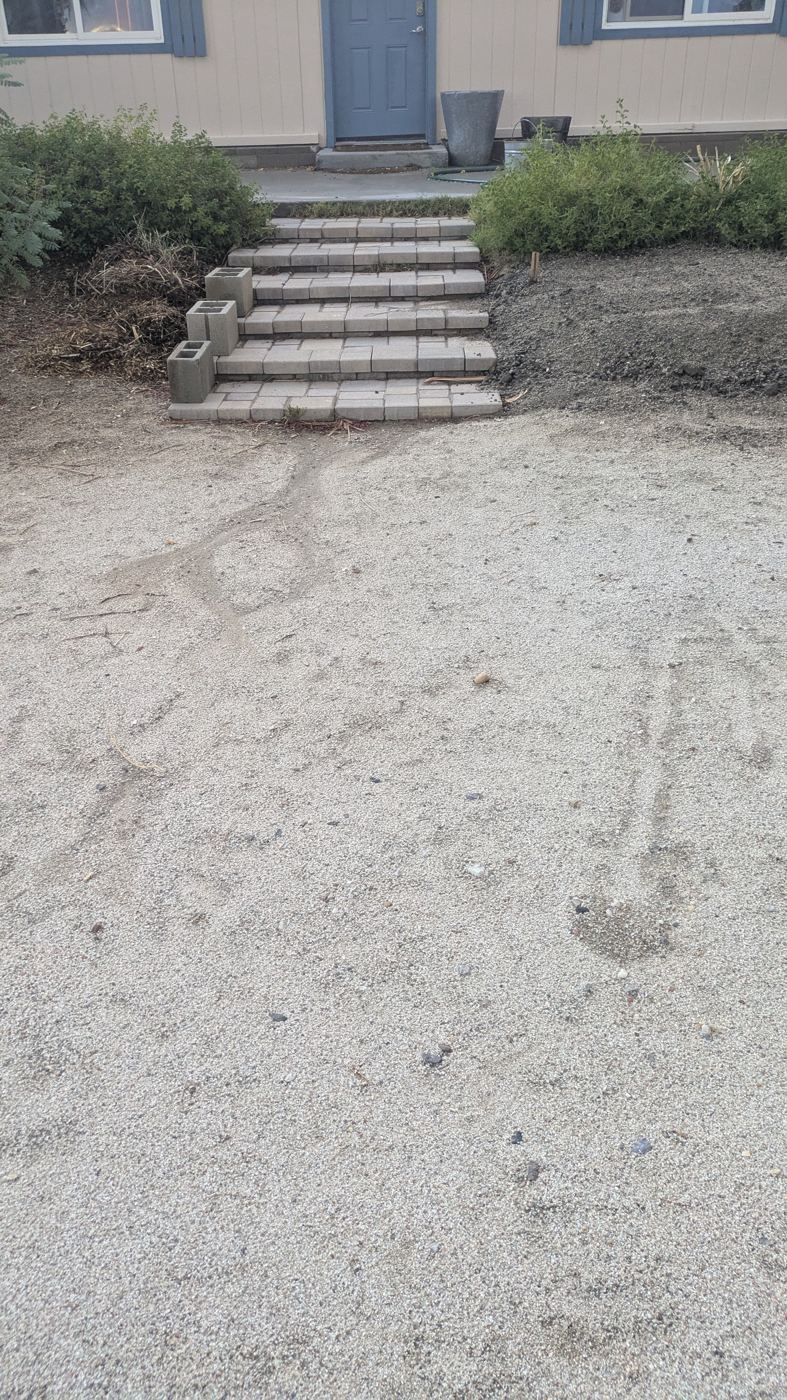
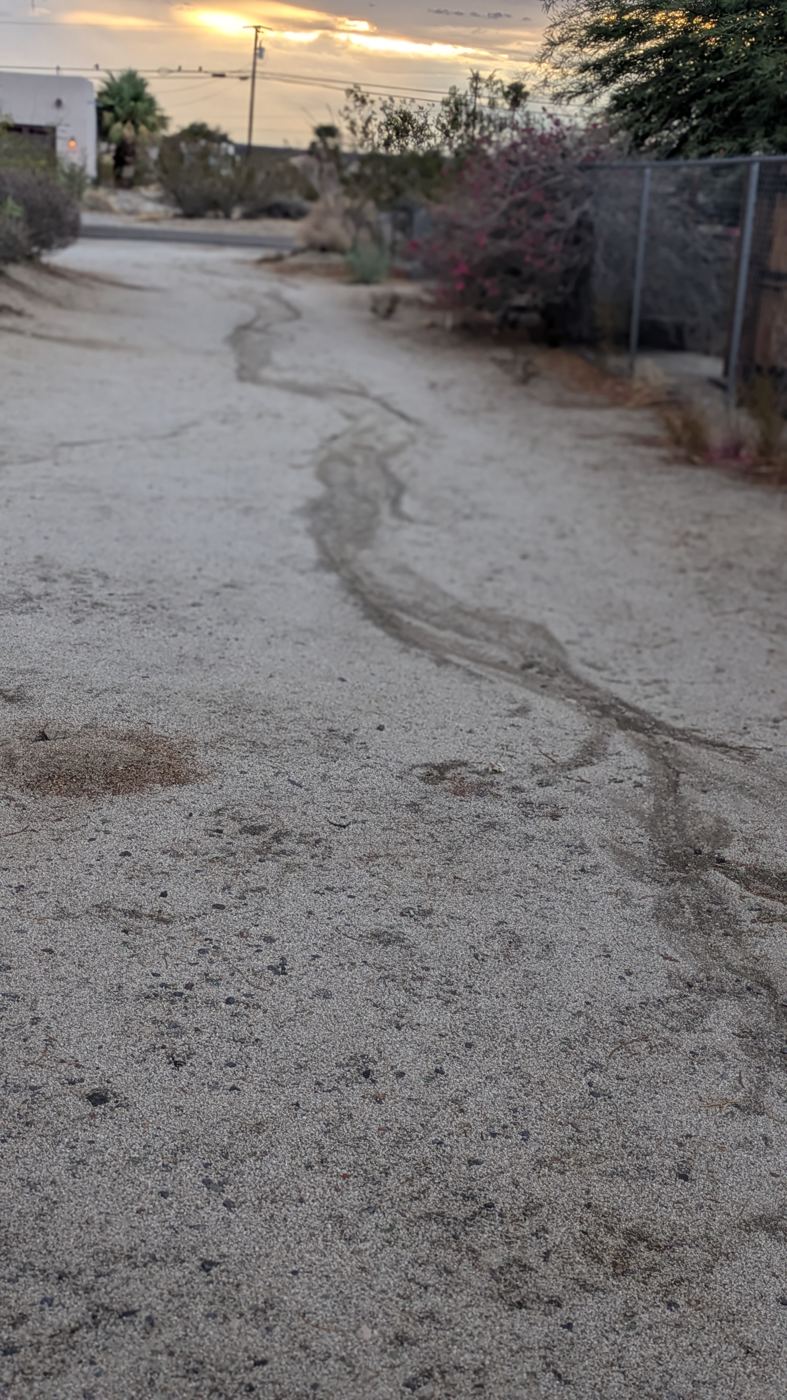
Water writes its own map. Sheet-flow trails crossed the gravel toward the front steps, and runoff cut small channels down the side driveway along the fence. These lines show exactly where the next swales and mulch belong.
3. The materials are already here
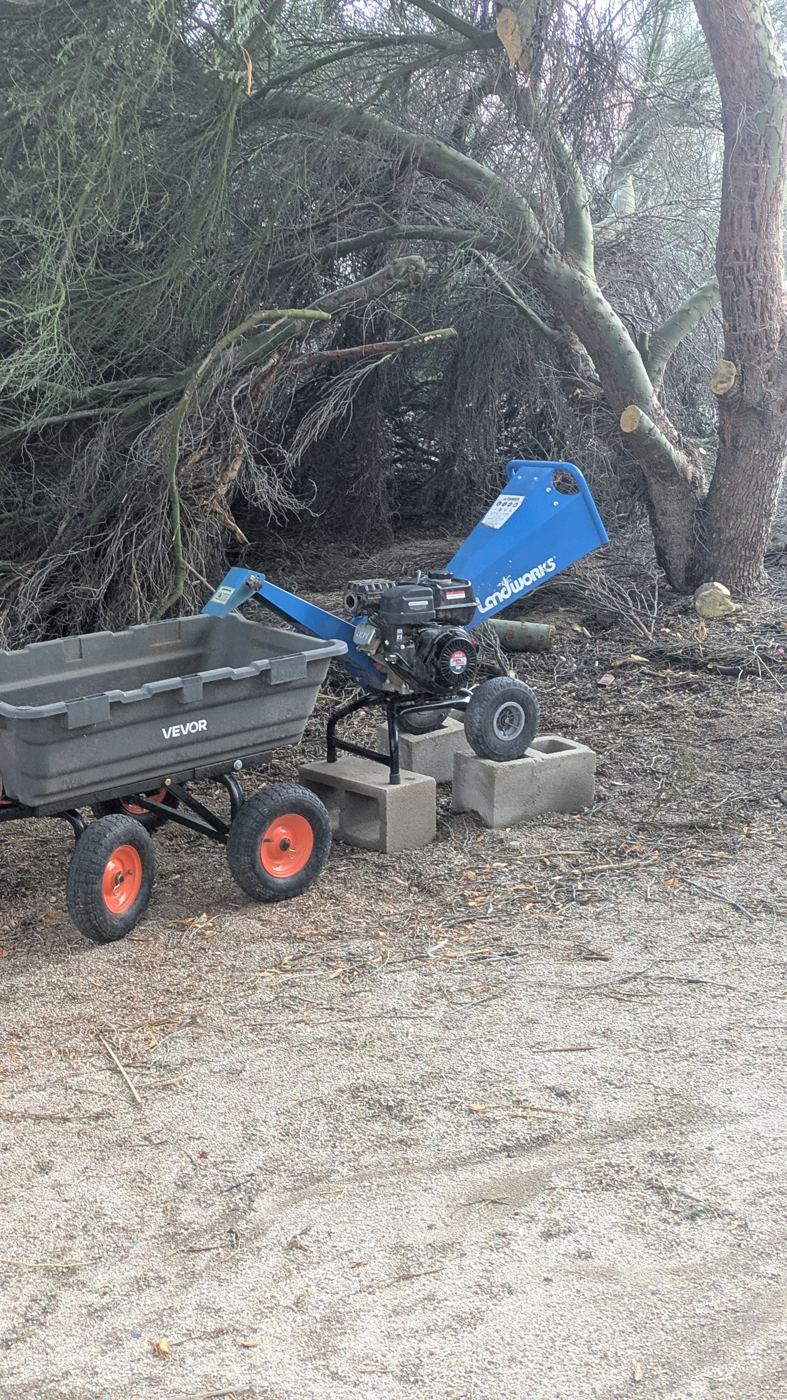
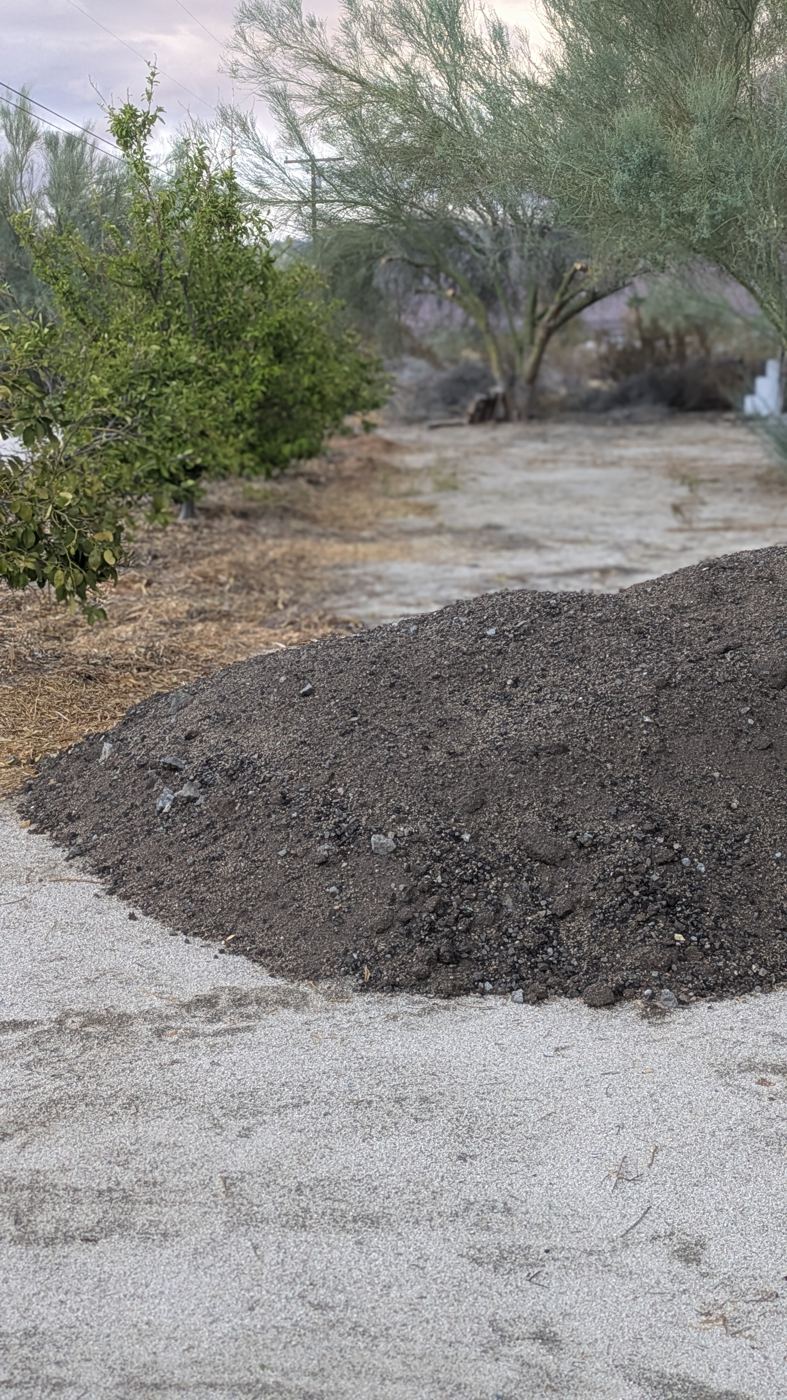
Mulch and hugelkultur wood come from the site itself: trees are trimmed, chipped and returned to the soil, not hauled away. Donated soil waits beside the mulched citrus orchard.
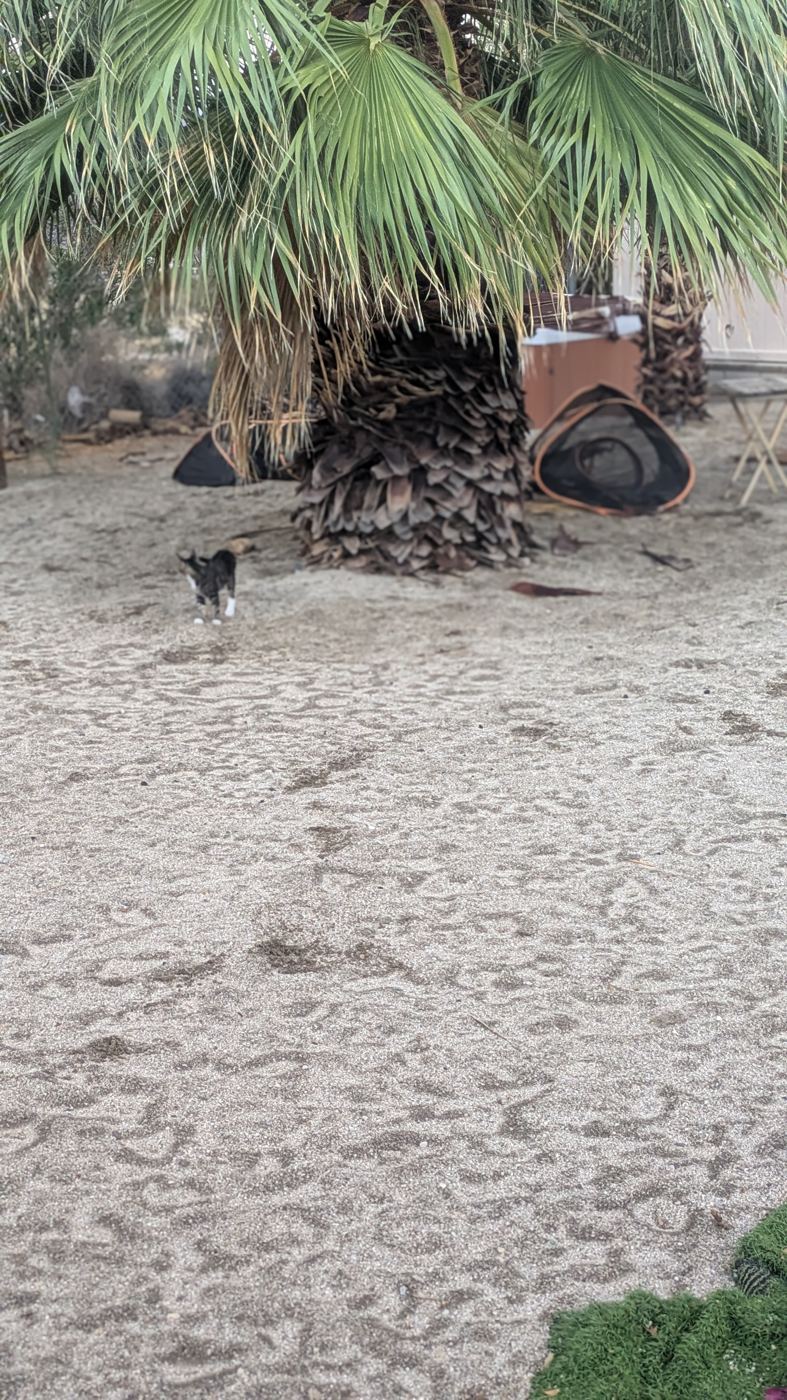
And one resident inspected the storm damage personally.
4. What we got wrong
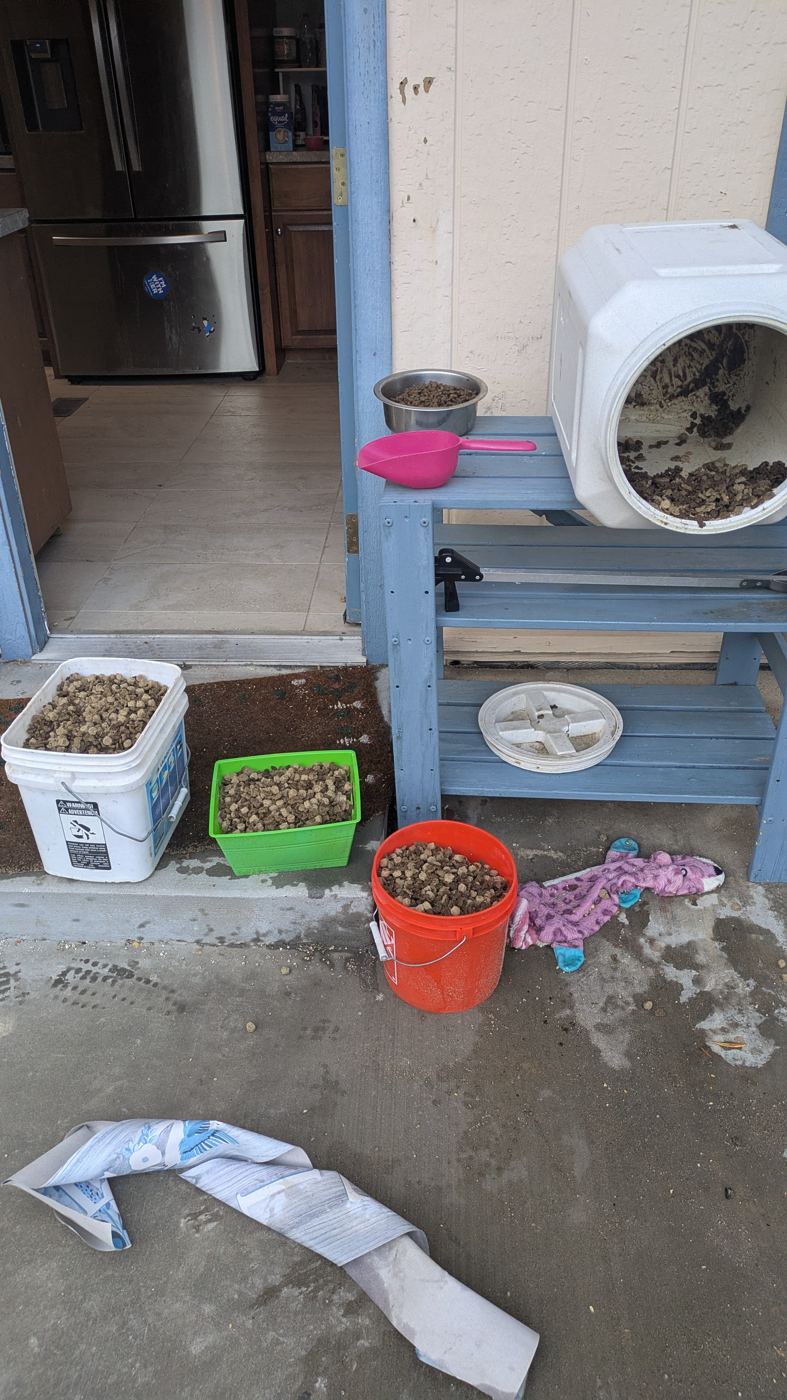
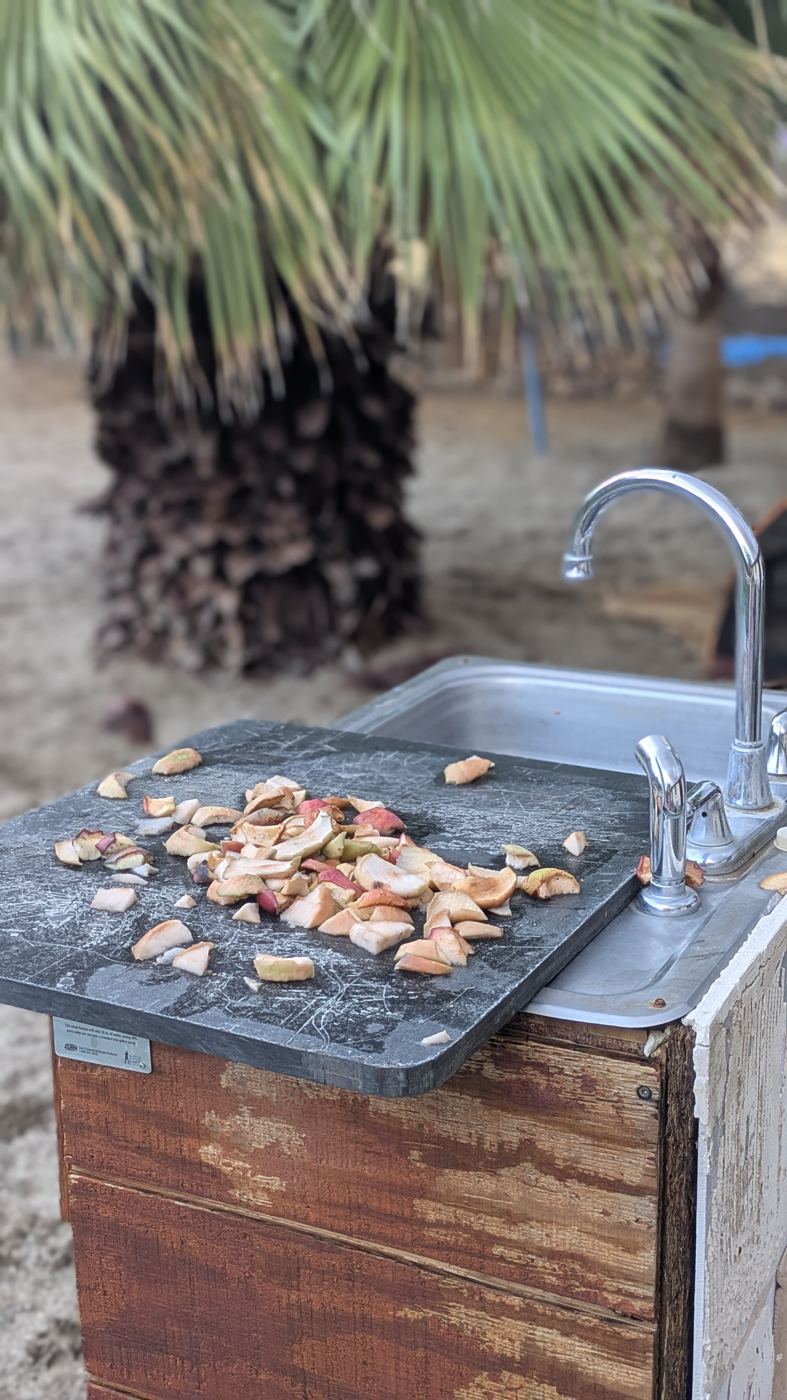
We publish failures alongside successes, because a perfect record is not a believable one. The monsoon caught us twice.
Lessons learned.
- Feed storage: store feed in sealed containers, raised off the ground and under cover, all year round. One storm can cost a 50 lb bag.
- Drying: sun-drying only works in dry air. Build a covered drying rack that can be pulled in when clouds build, and check the forecast during monsoon season.
5. Next steps
- Site swales and mulch beds along the flow lines photographed here: the berm edge, the gravel trail to the steps, and the side-driveway channels.
- Log the thermometers already on every building with dates and times, starting with rain events, so the next report carries numbers, not just photos.
- Rephotograph the same spots after the next rain to compare.
The dream in one hand, the work in the other. This morning was the work.
Back to Visit the WorkThe Desert Field TrialAll Field Reports